
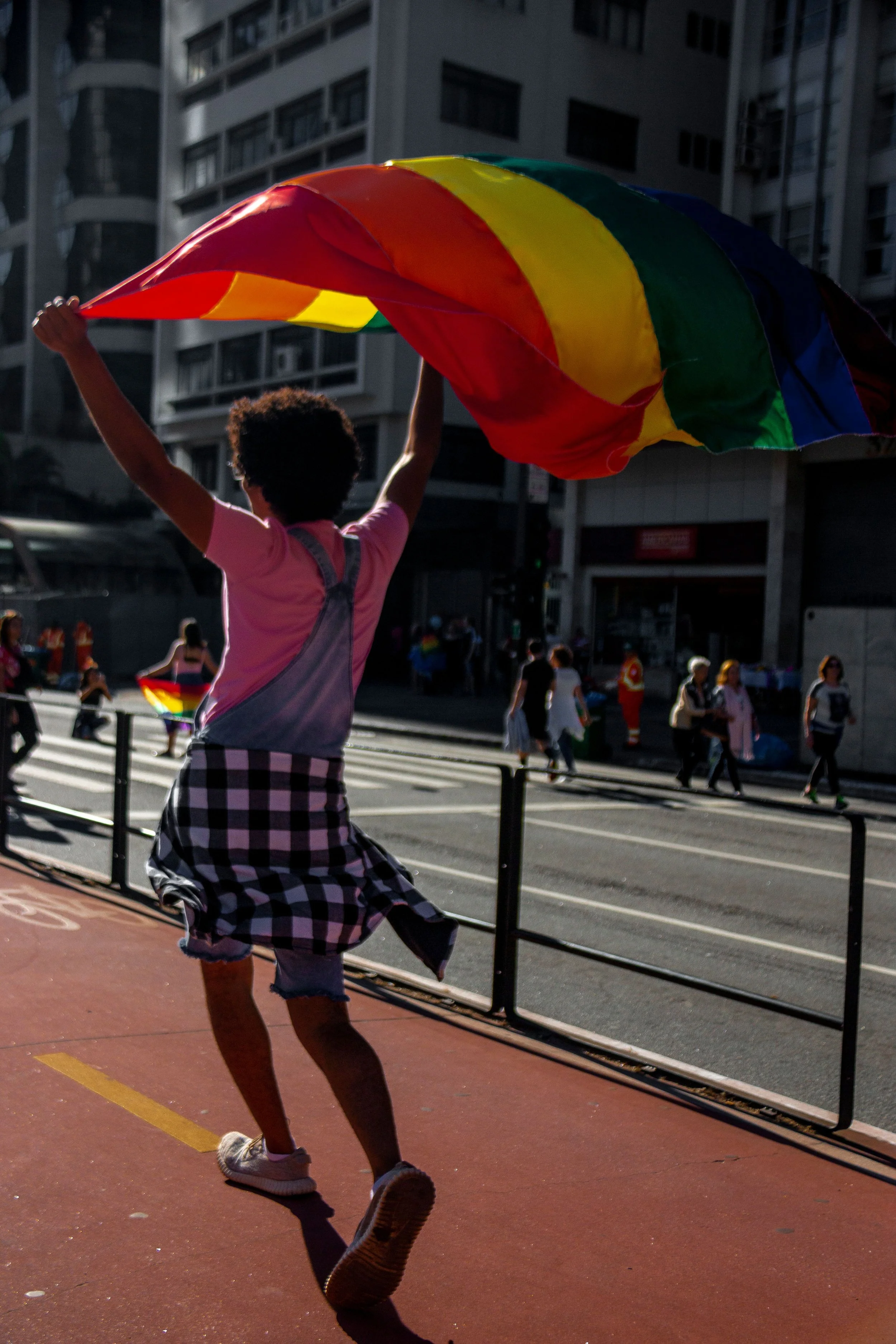
Living outside the dominant cultural narrative carries a measurable psychological weight. Across various demographics, clinical research demonstrates that belonging to a minority group introduces a unique layer of systemic friction into daily life. For instance, a neurodivergent individual might exhaust their executive functioning trying to mask their natural behaviours to appear "neurotypical" in a conventional office. Similarly, racial or religious minorities often remain in a state of chronic hypervigilance, constantly assessing their environments to navigate systemic barriers or interpersonal microaggressions. This sustained friction is known clinically as minority stress.
While the fundamental architecture of minority stress is shared across many marginalised groups, the specific stressors and systemic challenges vary significantly by demographic. As initiatives promoting visibility and representation come into focus, this article examines the specific psychological landscape of the LGBTQ+ community, exploring the clinical toll of heteronormativity and the biological necessity of inclusive spaces.
To understand why an inclusive society is a matter of public health, we must examine the physiological mechanics of identity, the human biological imperative for connection, and the tangible epidemiological impacts of systemic exclusion.
The Pathology of Minority Stress and the Heteronormative Baseline
In conservative sociocultural environments, psychological distress within LGBTQ+ populations is often misinterpreted as an inherent characteristic of their identity. However, Minority Stress Theory provides a clearer framework, conceptualising the chronic psychological and physiological toll of navigating a society that stigmatises one's authentic self.
To understand this toll, it is necessary to examine the "heteronormative baseline." For heterosexual and cisgender individuals, society provides a continuous, frictionless reflection of their identity. They do not have to perform a rapid risk assessment before casually mentioning their partner's pronoun in a taxi, deciding whether to hold hands in a shopping centre, or answering a colleague's question about their weekend plans. This safety is an unconscious privilege; an absence of fear that is rarely noticed by those who possess it.
For the LGBTQ+ demographic, everyday navigation requires continuous, low-level threat detection. Minority stress alters neurobiology through two primary vectors:
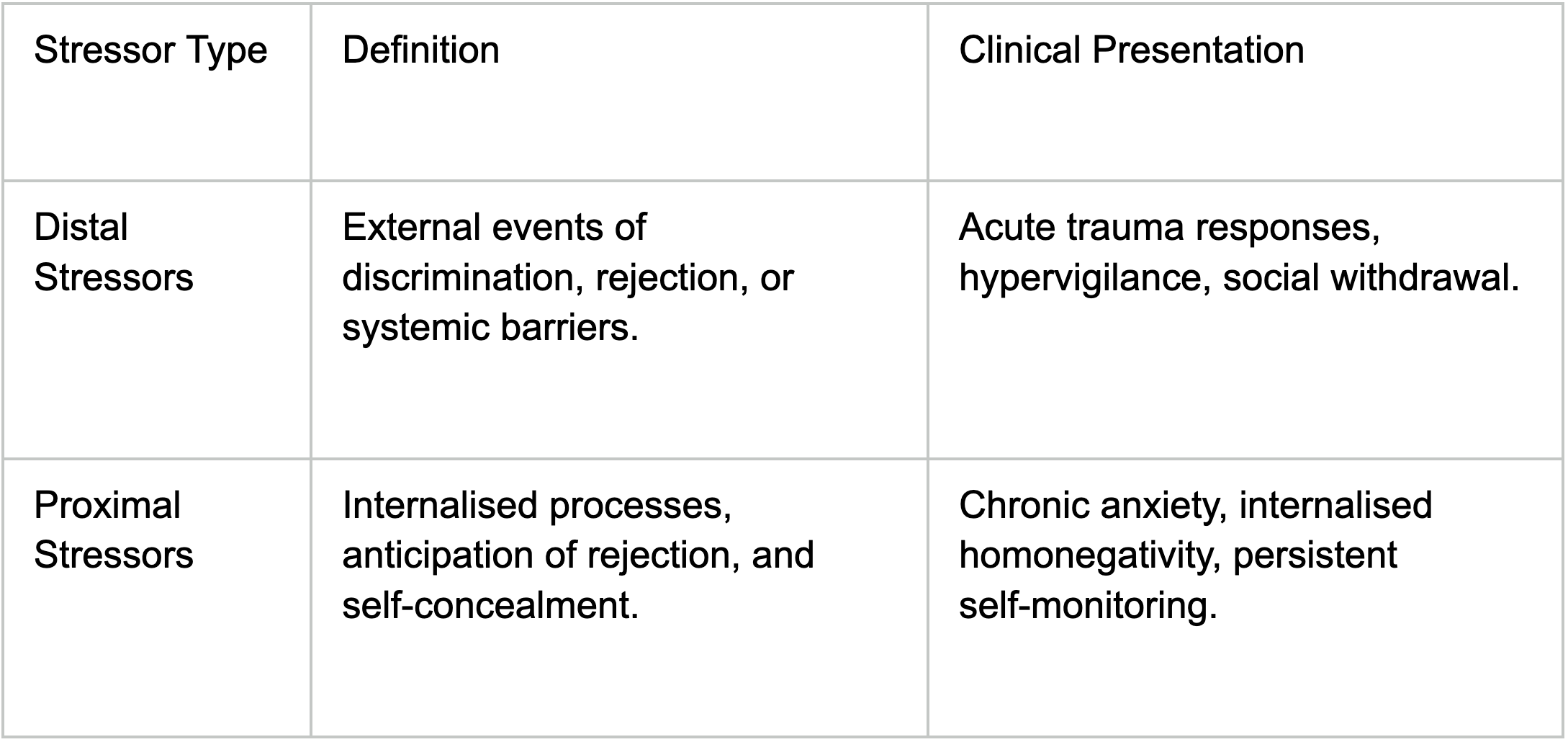
Minority Stress Model
This state of constant hypervigilance leads to allostatic overload—the severe physiological wear-and-tear caused by a chronically dysregulated stress response. The distress is not caused by the identity itself, but by the hostility and unpredictability of the environment reacting to it.
The Cognitive Load of Masking in the Workplace
These proximal stressors become particularly acute in professional environments. When corporate cultures lack explicit psychological safety, minority employees often engage in "masking" or "code-switching"—the conscious and unconscious suppression of one's authentic identity to assimilate into the dominant culture.
Clinically, masking is not merely a social adaptation; it is a profound drain on executive functioning. It requires the brain to run a secondary background process at all times: monitoring speech patterns, filtering personal anecdotes, and anticipating colleagues' reactions. This cognitive load consumes the working memory and emotional bandwidth that would otherwise be directed toward creativity, problem-solving, and productivity.
When employees are forced to compartmentalise their identities to survive their working day, organisations see higher rates of burnout, presenteeism, and turnover. Psychological safety in the workplace is not a superficial perk; it is a foundational prerequisite for optimal cognitive performance.
Loss of Safety and Belonging
Why are community representation events clinically vital? From infancy, humans are hardwired to seek secure attachments; environments where they feel safe, seen, and unconditionally accepted.
When individuals face conditional acceptance or rejection within their family of origin due to their identity, they experience a rupture in their primary safe haven. For the LGBTQ+ demographic, the community itself serves as a corrective emotional experience through the formation of "chosen families."
Community events and visibility initiatives offer spaces where individuals can finally dismantle their psychological armour and cease masking. Neurologically, finding a community that mirrors and validates one’s lived experience activates reward networks in the brain and down-regulates the amygdala (the brain's fear centre). Robust social support networks actively buffer against the somatic impacts of minority stress and foster psychological resilience.
Ways into Allyship
Building a resilient, inclusive community requires shifting how the broader public conceptualises allyship. Rather than viewing allyship as a static moral label, it is more accurate to approach it as an evolving, active practice. Effective allyship involves:
Decentring the self. Recognising that one's own baseline of psychological safety and cognitive ease is not shared by everyone.
Active calibration. Listening to the lived realities of the marginalised group and adjusting one's behaviour to reduce their need to mask.
Continuous feedback. Acknowledging when actions or language inadvertently cause harm, and correcting course without defensive posturing.
Fostering a Healthier Society: How We Can Help
Understanding the clinical impact of exclusion is the first step. Building the infrastructure for belonging is the next. Ultimately, advocating for community representation and inclusivity is an evidence-based intervention for public health and occupational wellbeing. When a society creates an environment where a demographic is subjected to chronic minority stress and forced masking, the entire healthcare infrastructure and economy bear the syndemic burden.
At our clinic, we recognise that mental health does not exist in a vacuum; it is deeply intertwined with the environments we navigate daily. We are committed to providing gender-affirming and culturally competent counselling that explicitly addresses the realities of minority stress, attachment ruptures, and burnout. Our clinicians offer a secure, validating space to process these unique challenges without the need to mask or explain your baseline reality.