

Introduction
Erik Erikson’s stages of development describe eight key periods of human growth, with each stage centred on a psychological conflict that shapes identity and personal development. During adolescence, this conflict is known as identity versus role confusion, where teenagers begin exploring their independence and developing a clearer sense of self.
This helps explain why adolescence can be marked by heightened sensitivity to social and environmental cues. During these years, teenagers are not only managing school, friendships, family expectations, and changing bodies, but also trying to understand who they are and where they fit in. This can make everyday experiences feel more emotionally intense than they might appear from the outside.
Teens may internalise criticism from friends or peers more deeply than adults, or feel personally hurt when excluded from social activities. A small comment, a disappointing grade, or being left out of a group chat can sometimes become part of a larger inner story about whether they are “good enough,” accepted, or capable. During this stage, self-esteem is formed with the teenager's experiences. Interactions at school, friendships, family relationships, and personal challenges can all influence how they see themselves and how they feel about their place in the world.
Self-doubt is a normal part of growing up, especially as teenagers begin making more choices for themselves. It can be easier to manage when they have coping skills and support systems to turn to, such as trusted adults, friends, counsellors, or strategies that help them slow down and think through their options. When this support is not available or feels difficult to access, decisions may feel more overwhelming, which can increase anxiety and uncertainty.
Key Takeaways:
Self-doubt is common during adolescence, but persistent patterns can affect confidence, learning, friendships, and emotional regulation.
Some teenagers may experience doubt due to various factors, such as academic pressure, social comparison, and family expectations.
Parents and caregivers can help by listening calmly, validating emotions, encouraging realistic goals, and modelling self-compassion.
Professional support may be helpful when doubt begins to affect daily functioning, school performance, peer relationships, or emotional well-being.
Understanding Teenage Self-Doubt
What Is Self-Doubt and Why Does It Happen in Teens?
Teenage years can feel emotionally complex because young people are learning to balance independence, connection, and identity. Neuroscience research can explain why this stage can involve stronger emotional reactions.
During adolescence, brain regions linked to emotion and threat detection, such as the amygdala, may be more developed than the prefrontal cortex, which supports planning, impulse control, and emotional regulation. The connections between these areas are still maturing, which can make it harder for some teenagers to pause, assess a situation, and respond calmly in the moment.
This does not mean teenagers are unable to make thoughtful choices. Rather, it helps determine why social feedback, conflict, setbacks, or uncertainty may feel especially intense during this period. With guidance, coping skills, and supportive relationships, teenagers can gradually strengthen their ability to manage emotions and make decisions with more confidence.
Self-doubt in adolescence refers to recurring uncertainty about one’s abilities, decisions, or self-worth. While doubt is normal, persistent uncertainty can affect motivation, emotional well-being, and social engagement. For some teenagers, it may show up as hesitation before trying something new; for others, it may appear as avoidance, overthinking, or harsh self-criticism.
This usually does not come from one single cause. A teenager may be carrying pressure from school, friendships, family expectations, or emotions they do not yet know how to explain. When these pressures build quietly, self-doubt can become more like a weight they carry into different parts of life.
This usually does not come from one single cause. A teenager may be carrying pressure from school, friendships, family expectations, or emotions they do not yet know how to explain. When these pressures build quietly, self-doubt can become more like a weight they carry into different parts of life.
1. Academic Pressure and Learning-Related Anxiety
Heavy workloads, frequent testing, and intense competition for top schools can create very high stress environments. In Singapore, conversations about youth anxiety often focus on school because academic performance is a major part of a teenager’s daily life. Researchers have also largely studied anxiety in relation to academic stress and test anxiety, which reflects the highly competitive education environment many students grow up in.
Over time, some teenagers may begin to see results not just as a reflection of effort, but as a measure of personal worth. When school starts to feel closely tied to identity, every test, assignment, or comparison with peers can carry far more emotional weight.
Teens may start to connect their sense of worth with how well they perform in school, which can become emotionally exhausting over time. A lower-than-expected grade may seem less like feedback on one task and more like confirmation that they are not capable enough. Over time, this can create low self-esteem in teens, especially when they repeatedly compare themselves with classmates who seem to be coping better.
Negative self-perception, such as “I’m not good at math,” can reduce motivation and perpetuate low confidence. Over time, this belief may extend beyond a single subject and become a broader judgement about the self, such as “I’m not good enough.”
When a teenager sees difficulty as a personal flaw rather than as a subject they are struggling with, their self-esteem may decline. This can lead to avoidance behaviours or fear of trying because mistakes feel like proof of failure.

2. Social Comparison and Societal Pressures
Peer interactions and social media can intensify comparison during adolescence, especially when teenagers are still developing their sense of identity and self-worth. At this stage, friendships play an important developmental role. Teenagers often seek emotional closeness, trust, loyalty, and personal disclosure in their peer relationships, which can make peer acceptance feel especially important.
As belonging matters, teenagers may become more sensitive to how others perceive them. They may choose peers who are similar to them, a pattern known as homophily, while also being influenced by the attitudes and behaviours of the group. When approval, laughter, attention, or acceptance is given in response to certain behaviours, teenagers may start to question whether they need to act a certain way to fit in. Over time, this can make them feel pressure to meet group expectations or worry about being judged.
Meanwhile, unrealistic beauty standards from social media can make it harder for teens to see themselves fairly. Teens are constantly exposed to edited images, achievements, social updates, and carefully curated versions of other people’s lives. Even when they know social media is not fully real, it can still shape how they see themselves. Likes, comments, and shares can serve as visible signs of approval or social acceptance, leading some teenagers to link these signals to their self-worth.
Research suggests that online validation may be positively related to self-esteem, whereas prolonged daily social media use may be negatively related to self-esteem. When validation is absent, inconsistent, or negative, it may increase self-doubt and make teenagers more vulnerable to social anxiety or feelings of inadequacy. A casual joke, a lack of response, or being left out of a gathering may be interpreted as evidence that they are unlikable or unwanted. For teenagers already experiencing teen anxiety, these moments can feel especially painful and difficult to move past.
3. Family Expectations and Parenting Dynamics
High parental expectations, pressure to succeed, or critical feedback can intensify self-doubt. Many parents want the best for their children, and their guidance often comes from a place of care. However, teens may sometimes experience repeated correction or comparison as a sign that they are not meeting expectations. Even well-intended comments may stay with them longer than expected, making them wonder if they are falling short.
Parenting style and family communication patterns influence self-esteem, confidence, and coping mechanisms. Warm, respectful communication can help teens feel safe enough to talk about mistakes and worries. In contrast, frequent criticism, emotional distance, or pressure without reassurance may make them hide their struggles.
Early attachment experiences shape how teens interpret criticism, evaluate their abilities, and form self-concepts. This is why family dynamics and teen confidence are closely connected. When teens know they are valued for who they are, not only for what they achieve, they are more likely to build a steadier sense of self-worth.
4. Physical and Sensory Challenges
Ongoing health issues, chronic discomfort, or fatigue can affect mood, concentration, and confidence. A teenager who is frequently tired, in pain, or physically uncomfortable may struggle to participate fully in school or social activities. When this happens repeatedly, they may begin to see themselves as less capable or different from others.
Additionally, sensory processing differences, including balance, touch, or auditory sensitivity, may affect how teens interact in social or school environments. A noisy classroom, a crowded event, an uncomfortable uniform, or a physically demanding activity can be overwhelming for some teens. These reactions are linked to sensory thresholds, which refer to the amount of sensory input a person can tolerate before feeling overloaded.
Since every teenager has different thresholds, the same environment may feel manageable for one person but stressful for another. When sensory overload happens, a teenager may become irritable, withdrawn, restless, or emotionally overwhelmed. If others do not understand the reason behind their reaction, they may feel embarrassed, judged, or isolated.
These challenges can quietly affect adolescent emotional well-being by influencing how safe, comfortable, and confident a teenager feels in daily environments. Support begins with understanding the teenager’s sensory needs and preferences. Adjustments such as quieter spaces, movement breaks, softer clothing, reduced noise, or planned recovery time may help.
5. Over-Scheduling and Fatigue
A busy schedule does not automatically mean a teenager will struggle, but limited time for rest can make stress harder to manage. In a competitive academic setting, adolescents who spend more time on homework or studying have less time for sleep, media use, and social activities. This suggests that school workload can affect more than academic performance. It is also likely to reduce the time teenagers have to recover, connect with others, and rest.
This is notable because stress and sleep can affect each other. Stress may make it harder to sleep, while lack of sleep can increase stress the next day. Many adolescents already experience biological changes that make them go to bed later, while early school start times, extracurricular activities, social obligations, and academic workload can further reduce their sleep time.
When tiredness builds up, teenagers may find it harder to concentrate, regulate emotions, or respond calmly to challenges. A difficult assignment, poor result, or disagreement may then feel more overwhelming than it would if they were well rested. In some cases, they may blame themselves for “not coping,” when the issue may also be linked to fatigue, pressure, and a lack of recovery time.
For this reason, support should not focus only on coping strategies or behavioural changes. Sleep, regular meals, rest, emotional safety, and realistic expectations are important foundations. When these needs are better supported, teenagers may have more capacity to manage stress, make decisions, and rebuild confidence.
Understanding the Differences: Self-Doubt, Low Self-Esteem, Perfectionism, and Impostor Syndrome
These terms are often used together, but they do not mean exactly the same thing. Understanding the differences helps parents, caregivers, educators, and teens respond more accurately. It also helps prevent a teenager’s struggles from being dismissed as “just stress” or misunderstood as laziness.
1. Self-Doubt
It can show up as questioning whether you are capable enough in a specific situation. This pattern is often temporary and may appear before an exam, in a new social setting, during a competition, or before a difficult conversation. Even teens who are generally confident can have moments where they second-guess themselves.
It usually improves with reassurance, preparation, encouragement, or success. For example, a teen may be nervous before presenting in class, but grow more assured after receiving kind or encouraging feedback. The concern becomes more significant when doubt appears repeatedly and prevents the teen from participating, trying, or recovering from setbacks.
2. Low Self-Esteem
Low self-esteem involves an ongoing negative view of yourself. Instead of questioning one area of ability, a teenager may believe they are “not good enough” overall. This can affect many areas of life, not just performance.
A teen with low self-esteem may dismiss compliments, assume others are judging them, or struggle to recognise their strengths. Unlike temporary doubt, this can be harder to shift without deeper reflection or support. It often requires patience, consistent reassurance, and, at times, professional help to rebuild a more balanced sense of self.
3. Perfectionism
Perfectionism can place a quiet but heavy burden on teenagers. They may set standards that are difficult to meet, worry about even small mistakes, and feel that their value depends on doing everything well. Even when they succeed, the relief may not last long before the pressure starts again.
Perfectionism can make coping with failure especially difficult because mistakes feel personal rather than part of the learning process. A teenager may redo work excessively, avoid tasks they cannot master quickly, or become upset over small flaws. This can gradually make everyday life feel like something they always have to “perform” well in.
4. Impostor Syndrome
A teen experiencing impostor syndrome may find it difficult to accept that they have earned their success. They might worry that people see them as more capable than they really are, even when there is evidence that they are doing well. As a result, they may downplay their achievements and assume they only succeeded because of luck, timing, or help.
This is likely to create a fear of being “found out” despite evidence of competence. For example, a high-performing student may still feel they do not truly belong in a top class or leadership role. The emotional strain comes from constantly trying to prove themselves while privately feeling inadequate.

What are the Common Signs of Persistent Self-Doubt in Adolescents?
Parents and caregivers may notice small changes first, such as a teen becoming more withdrawn, easily upset, or reluctant to try things they used to enjoy. These signs are worth noticing with care, not alarm, because they may be the teen’s way of showing that they are struggling inside.
1. Emotional Signs
Emotional signs may include frequent sadness, tearfulness, or low mood. A teenager may seem discouraged even after small setbacks, or they may become unusually quiet after receiving feedback. They might say things like “I’m not good enough,” “I always mess things up,” or “There’s no point trying.”
Irritability, frustration, or unexplained emotional outbursts can also appear. Anger can sometimes be a teen’s way of protecting softer emotions, such as sadness, fear, or embarrassment. They may become very sensitive to criticism, hold on to guilt, or read judgment into situations that others may see as minor. Rather than seeing this as “overreacting,” it can help to recognise that they may be struggling to manage overloaded internal pressure.
2. Behavioural Signs
Behavioural signs can show up as hesitation or reluctance to participate in class or group activities. A teen who fears embarrassment may avoid raising their hand, joining discussions, trying new hobbies, or attending events where they might be evaluated. From the outside, this may seem like a lack of interest, but it can actually be their protective response.
Loss of interest in hobbies, sports, or activities once enjoyed can also be a sign that something deeper is happening. Changes in eating habits, such as skipping meals or overeating, may appear when emotional distress affects routines.
3. Social and Relational Indicators
Social signs can appear when a teen finds it hard to share their views or stand up for their own needs. They may go along with others even when they are uncomfortable, keep their preferences to themselves, or struggle to say no.
Avoiding social situations, withdrawing from friends or family, and finding it difficult accepting praise are also signs worth noticing. Social withdrawal may be especially concerning when it becomes a pattern rather than a short period of needing space. If a teen brushes off compliments or refuses to celebrate their achievements, they are not always seeking reassurance; they may genuinely struggle to believe positive feedback.
What Is the Impact of Self-Doubt on Teenagers?
Occasional doubt can sometimes help a teen pause, reflect, or prepare more carefully. However, when it becomes persistent, it can gradually affect how they think, behave, learn, and connect with others. These changes are not signs that the teen is failing, but gentle signals that they may need more understanding, rest, reassurance, and support.
1. Academic Consequences
Persistent self-doubt and learning anxiety can disrupt concentration, memory, and information retention. A teen who is worried about failing may have difficulties absorbing information, even after studying. Anxiety can take up mental space that would otherwise be used for learning and problem-solving.
Over time, this fear can affect how they approach schoolwork. A teen may procrastinate, avoid challenging subjects, or give up easily due to fear of failure. When their performance starts to drop, it can then reinforce the belief that they are “not smart enough” or “not capable,” keeping the cycle of doubt going.
2. Emotional and Physical Health Effects
Prolonged academic stress and self-questioning can increase the risk of depression, fatigue, and sleep disturbances. A teen who constantly questions themselves may struggle to relax, even after completing tasks. Their mind may stay active at night, replaying mistakes or worrying about what comes next.
As this stress builds, everyday challenges may become harder to manage. They may seem more easily upset, short-tempered, discouraged, or tired than usual. Physical symptoms, such as headaches, stomach discomfort, or tiredness, may also appear when the body has been under pressure for too long.
3. Broader Behavioural Implications
Low self-esteem and persistent uncertainty can contribute to avoidance or unhelpful coping behaviours. In such situations, teenagers may avoid new opportunities, distance themselves from relationships, or distract themselves so they do not have to sit with difficult emotions. These behaviours may reduce distress temporarily, but they can also make doubt stronger over time.
Teens may develop harmful habits related to body image, such as disordered eating, especially when a lack of confidence is linked to appearance. If unaddressed, emotional struggles can escalate into mood disorders, including anxiety or depression. This is why early support matters, especially when changes in mood, behaviour, or relationships become consistent.
Supporting Teens Who Struggle with Self-Doubt
What Parents and Caregivers Can Do
Supporting teenagers through emotional uncertainty requires patience, steadiness, and compassion. Many teens do not need immediate solutions as much as they need to feel heard, understood, and taken seriously. When adults respond calmly, it becomes easier for teens to open up.
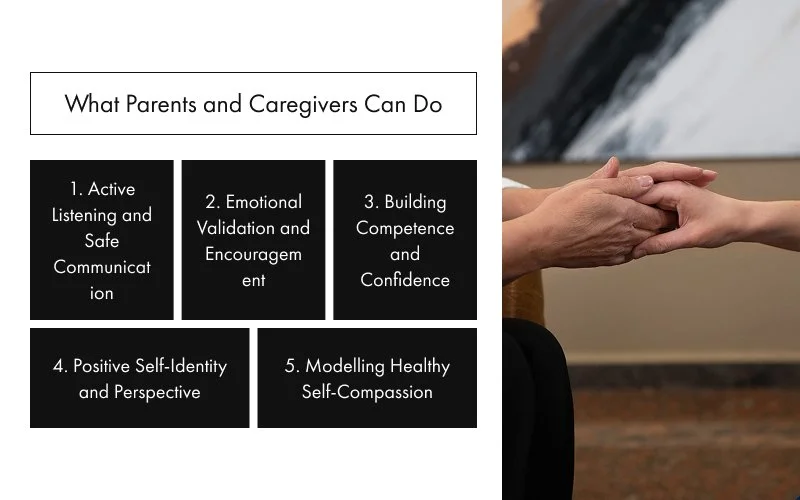
1. Active Listening and Safe Communication
Create a safe space for teens to express fears, frustrations, and challenges. This means listening without immediately correcting, lecturing, or turning the conversation into a lesson. Sometimes, a teen needs to speak freely before they can understand their own feelings.
Listen respectfully without judgment, showing that their thoughts and feelings are valued. Simple responses such as “That sounds really hard” or “I can understand why that affected you” can help a teen feel less alone. Encourage ongoing communication so teens feel supported, not only during crises but also in everyday moments.
2. Emotional Validation and Encouragement
Acknowledge teens’ emotions before trying to correct or minimise them. Phrases like “Don’t be so sensitive” or “It’s not a big deal” may come from a place of reassurance, but they can leave teens feeling unheard or ashamed for reacting strongly. Validation does not mean agreeing with every thought; it means showing them that their feelings matter and that they do not have to face them alone.
Offer praise and reassurance during setbacks or mistakes, helping teens process experiences constructively. Remind them of their strengths and achievements to counter negative self-talk. Encouragement is most helpful when it feels specific, sincere, and connected to effort, courage, kindness, persistence, or growth.

3. Building Competence and Confidence
Encourage teens to set realistic goals and pursue activities that provide tangible successes. Confidence grows when teenagers experience themselves as capable, not just when they are told they are capable. Small achievements can help rebuild trust in their ability.
Celebrate effort alongside outcomes so teens begin to see progress as something worth valuing, not just the final result. This can be reinforced through hobbies, volunteering, or small responsibilities where they get to build skills, contribute, and experience a sense of purpose. These meaningful experiences can remind them that their worth is not defined only by grades, appearance, or social status.
4. Positive Self-Identity and Perspective
Guide teenagers to look at their strengths and weaknesses with honesty, but without harsh self-judgment. When they learn to see mistakes as part of learning, they can recognise what needs improvement without turning every setback into a personal failure. This helps them build a more balanced and compassionate view of themselves.
From there, parents and caregivers can encourage teenagers to take personal responsibility, reflect on what happened, apologise when needed, and repair the situation. Teens benefit from learning that mistakes do not make them bad or unworthy. Instead, mistakes can become part of learning, repairing, and growing.
5. Modelling Healthy Self-Compassion
It is important for parents and caregivers to demonstrate self-acceptance and confidence through their behaviours. Teens notice how adults speak about themselves, handle frustration, respond to criticism, and recover from mistakes. Modelling healthy self-compassion gives them a real-life example to follow.
Show how to handle setbacks constructively, modelling emotional regulation and resilience. Reinforce positive self-talk, guiding teens to replace “I can’t do this” with “I can try and ask for help if needed.” This kind of language teaches teens that confidence does not require certainty; it requires willingness, patience, and support.
What Teens Can Try When Self-Doubt Shows Up
As a teenager, you do not have to wait until you feel fully confident before taking the next step. Often, confidence builds gradually through small actions, even when doubt is still present. Instead of trying to push the doubt away, the aim is to notice it, slow down, and respond in a way that feels steadier and more manageable.
These strategies are simple enough to practise in everyday situations. They can be used before a test, after a difficult conversation, when comparing oneself to others, or when feeling afraid to try.
1. Name the Pattern
When doubt shows up, it is helpful to pause and label it: “This is self-doubt.” Naming the experience can create a little distance from it. Instead of believing every thought immediately, the teen can begin to notice that doubt is a pattern, not a fact. Notice what triggered it. Was it a grade, a comment, a social media post, a mistake, or a comparison? Separating the feeling from facts helps teens slow down before reacting.
2. Do a 2-Minute Reset
Take slow, steady breaths. Unclench your jaw and relax your shoulders. Sit or stand upright to shift your posture. Let your body calm your thoughts. When the nervous system is activated, thoughts often become harsher and more fearful. A short reset can help the mind return to a steadier place before deciding what to do next.
3. Run a Reality Check
Ask gentle reality-check questions such as: “What is the actual evidence?”, “Am I assuming the worst?”, and “What would I say to a friend in this situation?” These questions can help you slow down and move from harsh self-judgment toward a more balanced view. Often, the same kindness and fairness you would offer a friend is what you need to practise offering yourself.
4. Take One Small Action
Instead of waiting to feel completely ready, ask yourself, “What small step can I take right now?” One small action, such as starting a paragraph, reviewing one page, or asking for help, can make the situation feel less overwhelming. Progress often begins with doing something small, not doing everything perfectly.
5. Reduce Avoidance
Avoidance can seem comforting at first, especially when a situation feels stressful or exposing. However, the more you avoid something, the more threatening it can begin to seem. Trying first, then reflecting on the result, helps you learn that discomfort can be managed. With gentle, repeated action, confidence can grow from real experience, not just reassurance.

When to Seek Professional Help
It can be difficult for parents to know when a teenager needs more than home-based support. Many teens go through periods of uncertainty, moodiness, or withdrawal, and not every difficult phase requires therapy. However, professional psychological services can be valuable when patterns persist, intensify, or begin affecting daily life.
Seeking support does not mean a parent has failed or that a teen is broken. It means the young person may benefit from a safe, structured space to understand what they are experiencing. A trained professional can help identify underlying patterns and provide guidance that fits the teen’s needs.
Parents and caregivers should consider professional support when self-doubt interferes with daily functioning, school performance, or social engagement. Support may also be needed when signs of co-occurring anxiety, depression, or social withdrawal appear. Persistent negative self-beliefs that hinder emotional regulation or peer relationships should not be ignored.
Therapy can give teenagers a safe space to understand why they may be so hard on themselves. During the session, they can explore how internalised criticism, anxiety, family stress, school pressure, peer experiences, or past emotional wounds may still be shaping self-view.

Frequently Asked Questions
1. Is self-doubt normal in teenagers?
Yes, it is a common part of adolescence. During the teenage years, young people are forming their identity, gaining independence, and navigating academic, social, and familial expectations. Occasional uncertainty about abilities, decisions, or social acceptance is normal. However, persistent second-guessing that interferes with daily life, relationships, or emotional well-being may indicate a need for additional support.
2. How can parents help a teen overcome self-doubt?
Parents can support their teen by creating a safe, non-judgmental environment where feelings are validated. Encouraging open conversations, acknowledging achievements, and helping set realistic goals can reinforce confidence. Modelling self-compassion and resilience, avoiding excessive criticism, and guiding teens to focus on effort rather than perfection are also effective. For deeper or persistent feelings of doubt, professional guidance can provide tailored strategies to build emotional resilience.
3. Can therapy help build lasting self-confidence?
Yes, therapy can provide teens with a safe and structured space to explore the roots, develop insight, and practice coping strategies. By adopting evidence-based approaches, such as psychodynamic therapy, cognitive-behavioural techniques, or trauma-informed therapy, psychotherapist in Singapore help adolescents understand internalised criticism, regulate emotions, and strengthen self-worth. Over time, therapy fosters sustainable confidence, healthier decision-making, and improved relationships with self and others.
4. Why do teenagers doubt themselves even when they do well?
It is common for teenagers to doubt themselves as they’re still figuring out who they are. They may become more aware of how they compare with others, place greater weight on approval from peers or adults, and struggle to fully accept their achievements. Even when they do well, it may not “sink in” yet. It just means they’re growing.
Conclusion
Self-doubt is common but can become limiting if unaddressed. For teenagers, doubt may be shaped by school pressure, social comparison, family expectations, fatigue, body image concerns, emotional sensitivity, or past experiences. When these pressures build up, a teen may begin to question not just what they can do, but who they are.
Awareness, supportive relationships, and professional guidance are key. Parents and caregivers can help by listening with warmth, validating feelings, encouraging realistic goals, and modelling self-compassion. Teens can also learn to name unhelpful patterns, regulate their bodies, check their thoughts, and take small steps forward.
At The Psychology Practice, we provide compassionate, evidence-informed psychotherapy in Singapore for teenagers navigating self-doubt. Our clinicians combine expertise in adolescent development, trauma-informed care, and psychodynamic therapy to help teens understand the underlying causes of their uncertainty and build lasting confidence.
As a dependable psychology centre in Singapore, we understand that every teenager’s experience is different. Instead of applying a one-size-fits-all approach, support is shaped around the teen’s story, emotional needs, and pace of growth.
Give your teen a safe space to feel heard, understood, and supported. Contact us to take the first step with them.